jump to content

Managed Dynamic Server

Infrastructure That Thinks for Itself

Behind every openVisavid conference is a core system that dynamically distributes participants across multiple server instances—the so-called Managed Dynamic Server, also known as the mesh system. It ensures that individual server instances are not overloaded and that no capacity goes unused.

Higher performance – lower resource usage
Your Benefits

For consistent performance without overloading or underloading.

Load distribution.

Participants are distributed across multiple server instances rather than overloading a single one.

Economic efficiency.

Resources are held only when there is an actual need—not in a permanent surplus.

Flexibility.

The system automatically scales with the number of concurrent conferences.

Sustainability.

Less unused server capacity means less unnecessary energy consumption.

Whether it's a small group meeting or a large conference with many concurrent sessions, the Basis system ensures that performance remains stable without you having to worry about the underlying infrastructure. It's infrastructure that thinks for itself.

Real-Time Video Communication

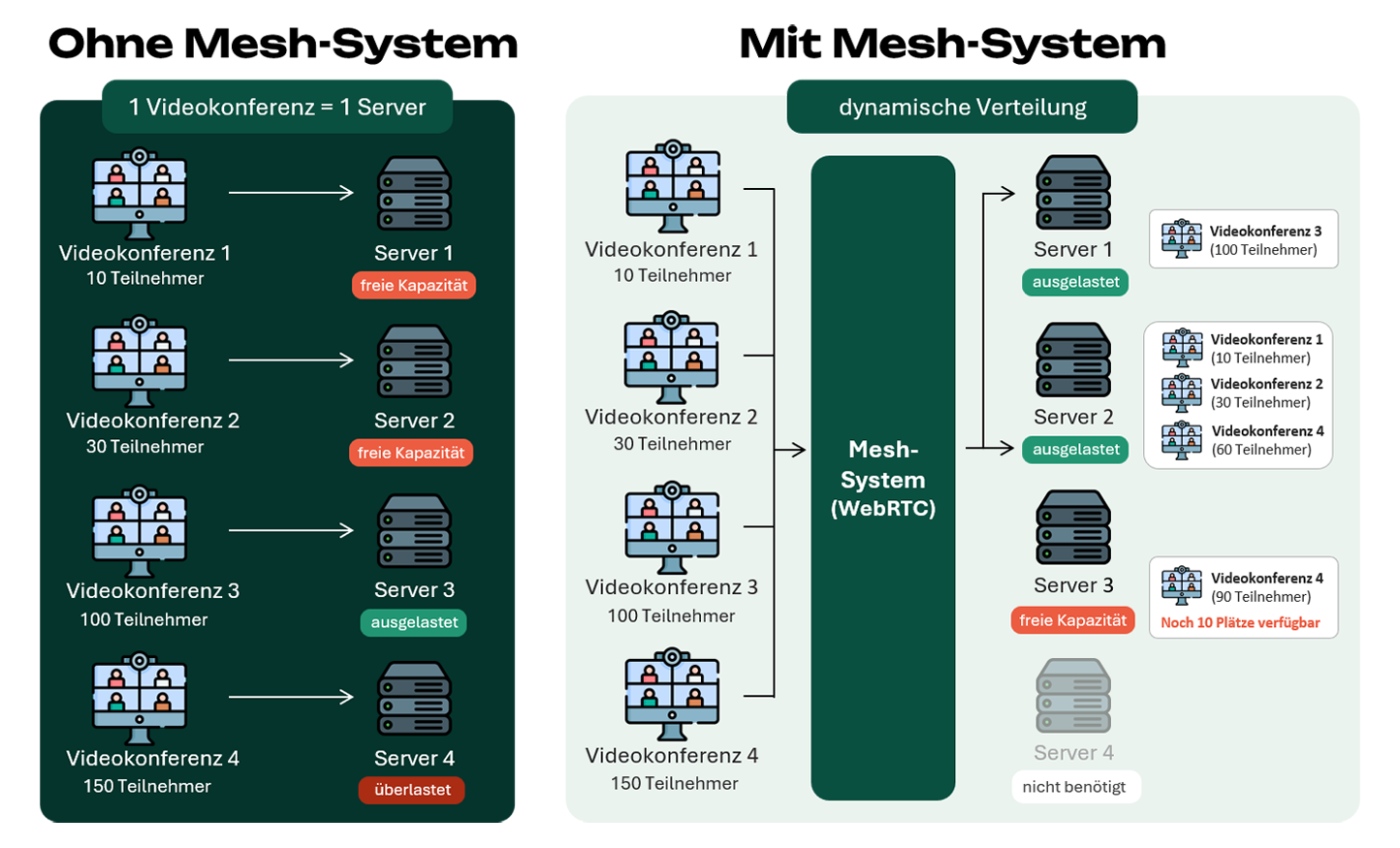
Video conferencing is a form of real-time communication that only works if the systems have sufficient computing power and memory to support it. For this reason, most providers of open-source video conferencing technology use a one-to-one model: one server instance is provisioned per video conference.

In one implementation, these server instances are dynamically allocated and released again when the video conferences end. This ensures stable and somewhat scalable operation.

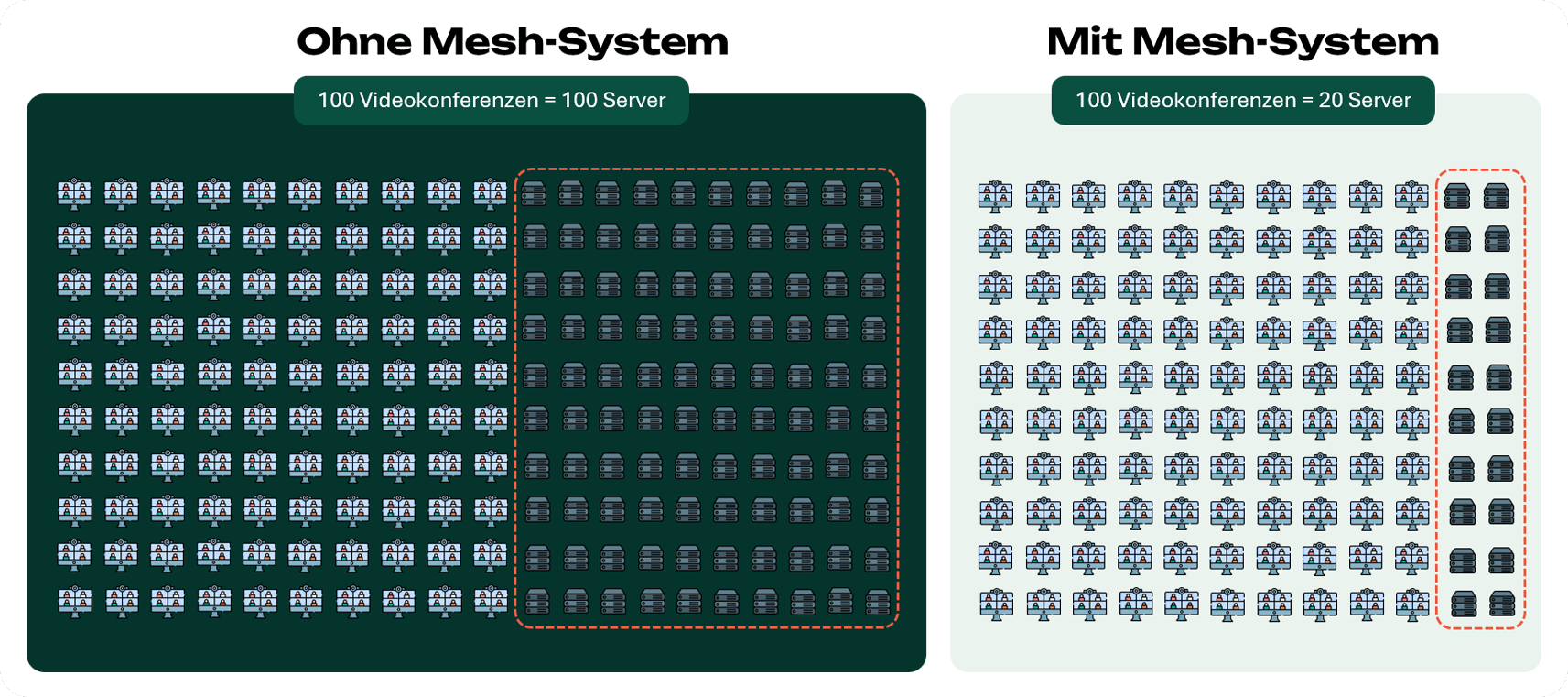
Infografik: Vergleich Server-Bedarf ohne und mit Mesh-System

Dynamic Load Distribution

Gegenüberstellung der Server-Auslastung mit und ohne Mesh-System

openVisavid takes this a big step further. The strict assignment of server instances to video conferences is eliminated. Participants in a video conference can be dynamically distributed across multiple server instances, thereby ensuring they are utilized appropriately. This prevents both underutilization and overloading of server instances. For example, if several thousand people unexpectedly join a video conference, they are distributed in real time across as many server instances as necessary to prevent overloading.

Managed Dynamic Server | openVisavid